

Eastern Sierra Nevada Photography Guide
The Eastern Sierra Nevada stretches along California's eastern edge, a landscape of singular beauty and emotional power. For photographers drawn to fine art landscape work, this region offers everything: granite cliffs that soar above wildflower meadows, alpine lakes of impossible clarity, geothermal phenomena, and vast desert vistas that seem to belong to another world. Whether you are planning your first visit or returning to explore new compositions, this guide will help you understand what makes Eastern Sierra photography so compelling and how to approach these extraordinary places with intention.
Why Eastern Sierra Photography Captures Hearts
The Eastern Sierra holds a particular magic for photographers and art collectors alike. The region's stark contrasts create compositions that feel almost mythic: the vertical thrust of mountain walls meeting horizontal lake surfaces, dark granite against luminous sky, barren desert plains bordering lush meadows. These natural thresholds and passages invite the viewer to step across into something larger.
The light here changes rapidly and dramatically. Dawn breaks with crimson intensity. Afternoon brings those rare moments of soft, diffused illumination. Sunset ignites the peaks in shades of rose and gold. Because the Eastern Sierra sits at high elevation with minimal atmospheric pollution, the air is exceptionally clear. Colors hold their true value, and distant peaks appear almost impossibly detailed.
What draws many photographers back again and again is something beyond technique: it is the visceral experience of standing in a landscape so vast it renders everyday concerns irrelevant. That feeling translates into imagery that speaks to collectors and admirers of fine art photography because it conveys something true about being human in the presence of scale and beauty.
Eastern Sierra Photography Locations Worth Your Time
The region spans from Mono Lake in the north to the Owens Valley in the south, encompassing several distinct ecosystems and photographic opportunities.
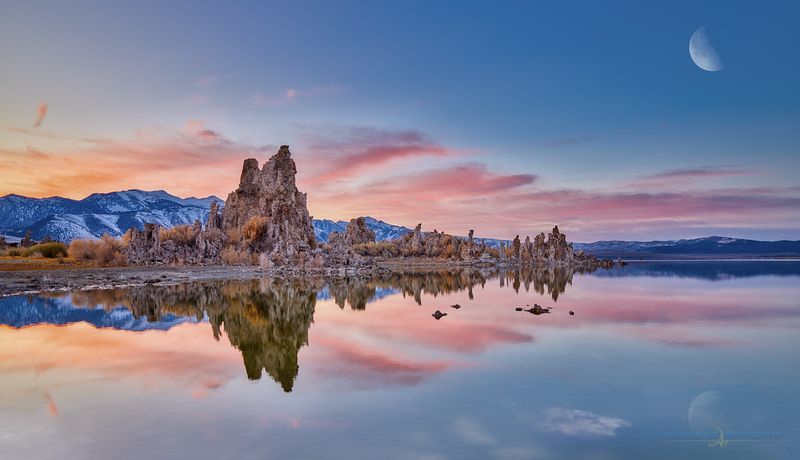
Mono Lake and Surroundings: Mono Lake's tufa towers and mineral-rich waters create a landscape unlike anywhere else on Earth. The water's unusual composition produces striking colors, and the surrounding mountains create powerful compositional frames. Early morning and late afternoon light transform these sculptural formations into something almost otherworldly. Photographers often return to Mono Lake in the nick of time across multiple seasons to layer new discoveries with familiar vistas.
Lone Pine and Whitney Portal: The town of Lone Pine serves as a gateway to Mount Whitney and the surrounding high country. Lone Pine Creek offers intimate water compositions framed by towering peaks. The elevation gain from town to high alpine is rapid, allowing you to photograph multiple ecosystem transitions in a single day.
Yosemite High Country: While Yosemite Valley itself draws crowds, the high country to the east offers solitude and graphic compositions. The Cathedral Range, Tenaya Lake, and the passes between peaks reward photographers who invest time exploring beyond the main valley.
Death Valley National Park: The lowest point in North America presents landscapes of stark beauty and dramatic color. Salt flats, sand dunes, colorful badlands, and mountains rising directly from the valley floor create compositions of genuine visual drama.
Timing, Light, and Seasonal Considerations
When you photograph the Eastern Sierra matters as much as where you photograph it.
Spring brings wildflower blooms to the high meadows, though snow may still linger at higher elevations. Summer offers accessible trails and reliable weather, but afternoon thunderstorms are common. Fall presents the clearest light and skies, with aspens adding warmth to compositions. Winter transforms the landscape into something sculptural and severe, with snow creating graphic contrasts against dark stone, though many high elevation roads close.
Light quality shifts throughout the day in ways that are particularly pronounced at high elevation. Pre-dawn light has a quality of anticipation. First light strikes peaks in ways that create visual drama impossible at other hours. Midday light flattens colors but can emphasize geometric forms and shadow patterns. The hour before sunset often brings the most saturated colors. Twilight and dark twilight extend photographic possibilities well past sunset.
Photographers serious about fine art compositions often return to the same location across different seasons and light conditions. This practice of returning reveals aspects of a place that single visits cannot access. It deepens both technical skill and emotional connection to the landscape.
Composition Approaches for Eastern Sierra Landscapes
The drama of the Eastern Sierra can tempt photographers to include everything. Instead, consider these approaches to more intentional composition.
Use foreground elements deliberately. A stream, meadow, or cluster of rocks creates a threshold that invites the viewer into the scene. The act of framing a passage from near to far mirrors the way humans actually experience landscape. Many successful Eastern Sierra compositions stage this movement from intimate detail into vast distance.
Seek out frames within the frame. A stone arch, a gap between peaks, a window of light through clouds creates a natural composition that guides the eye. These thresholds amplify the sense of scale and drama.
Test both vertical and horizontal orientations. The Eastern Sierra's tall peaks may suggest vertical framing, but horizontal compositions often better capture the lateral sweep of alpine basins or desert plains.
Return to the same location multiple times. Light changes everything. A composition that feels flat under midday sun may reveal hidden drama at dawn. The landscape will teach you what it needs to say.
Practical Considerations
The Eastern Sierra demands respect and preparation. High elevation brings rapid weather changes, intense sun exposure, and altitude challenges. Carry layers, water, and sun protection. Many trails are steep and demand physical conditioning. Check road conditions before driving high passes.
The region is vast. Distances between significant locations are longer than many photographers expect. Plan your route to minimize driving time and maximize light-gathering opportunities. Consider staying in one location for multiple days rather than attempting a whirlwind tour.
Permits may be required for certain areas and activities. Check with local ranger stations and park websites before your trip. Respect trail closures and access restrictions. The health of these landscapes depends on responsible visitor behavior.
Bringing Eastern Sierra Beauty Into Your Home or Workspace
Photographs of the Eastern Sierra translate beautifully into fine art prints for collectors and design enthusiasts. The landscape's inherent drama and clarity print exceptionally well at large scale. Hanging a carefully composed image of Mono Lake's tufa towers or a granite peak reflected in alpine waters brings that sense of scale and reverence into everyday spaces.
High-quality large-format imagery captures details and color subtleties that smaller prints cannot convey. The compositions from the Eastern Sierra, with their emphasis on light and passage, work particularly well as focal points in rooms where you seek to create a contemplative atmosphere.
The Eastern Sierra Nevada remains one of North America's most photographically rewarding landscapes. Whether you are drawn to the region's graphic simplicity, its color and light, or the emotional response it produces, the landscape will reward intention, patience, and multiple returns. The beauty waiting there is worth the effort to capture and worth displaying where you live and work.

Scritto da Greg Hammond
Visita il sito dell'autore



Commenta
Questo sito è protetto da hCaptcha e applica le Norme sulla privacy e i Termini di servizio di hCaptcha.