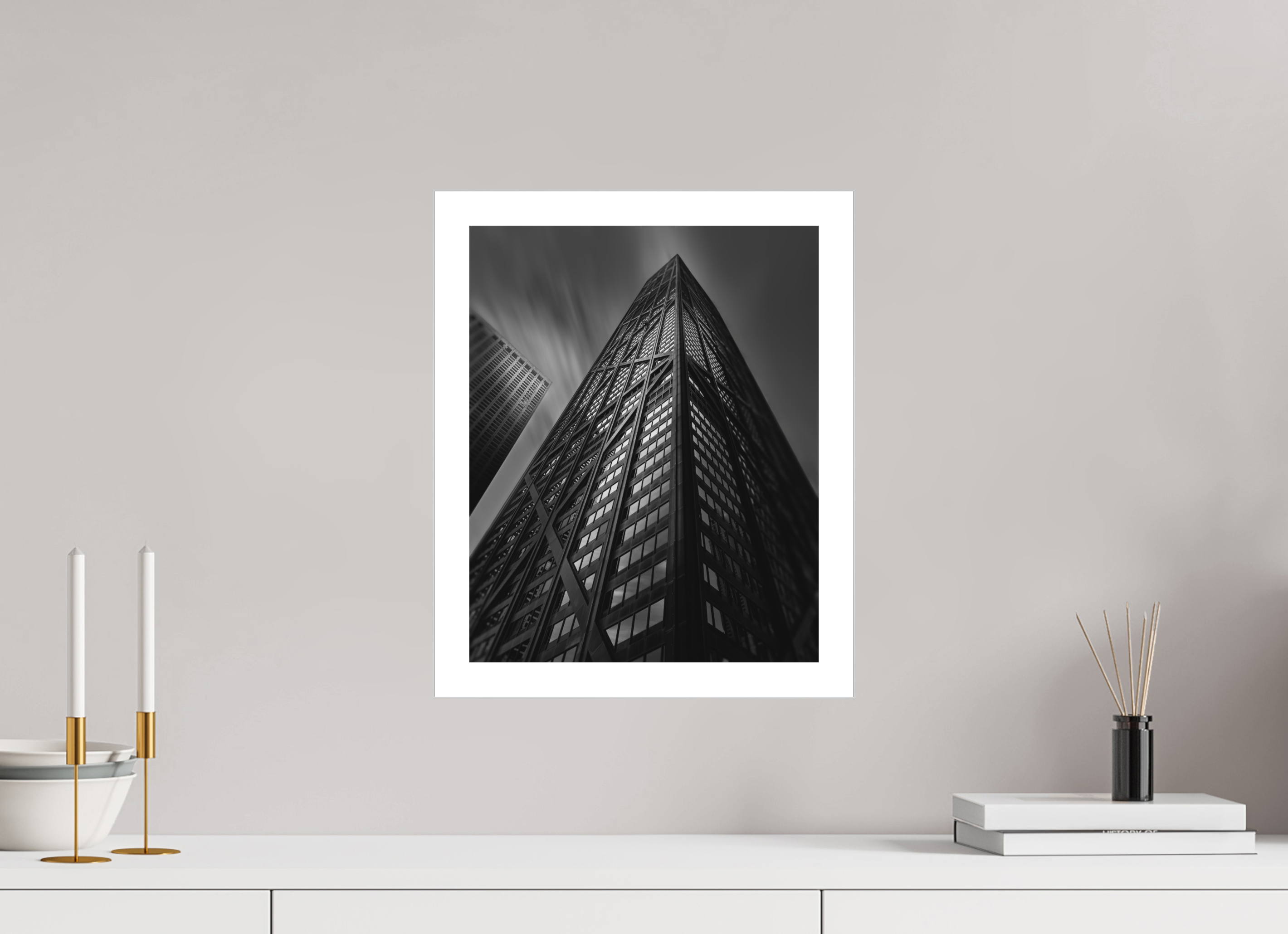

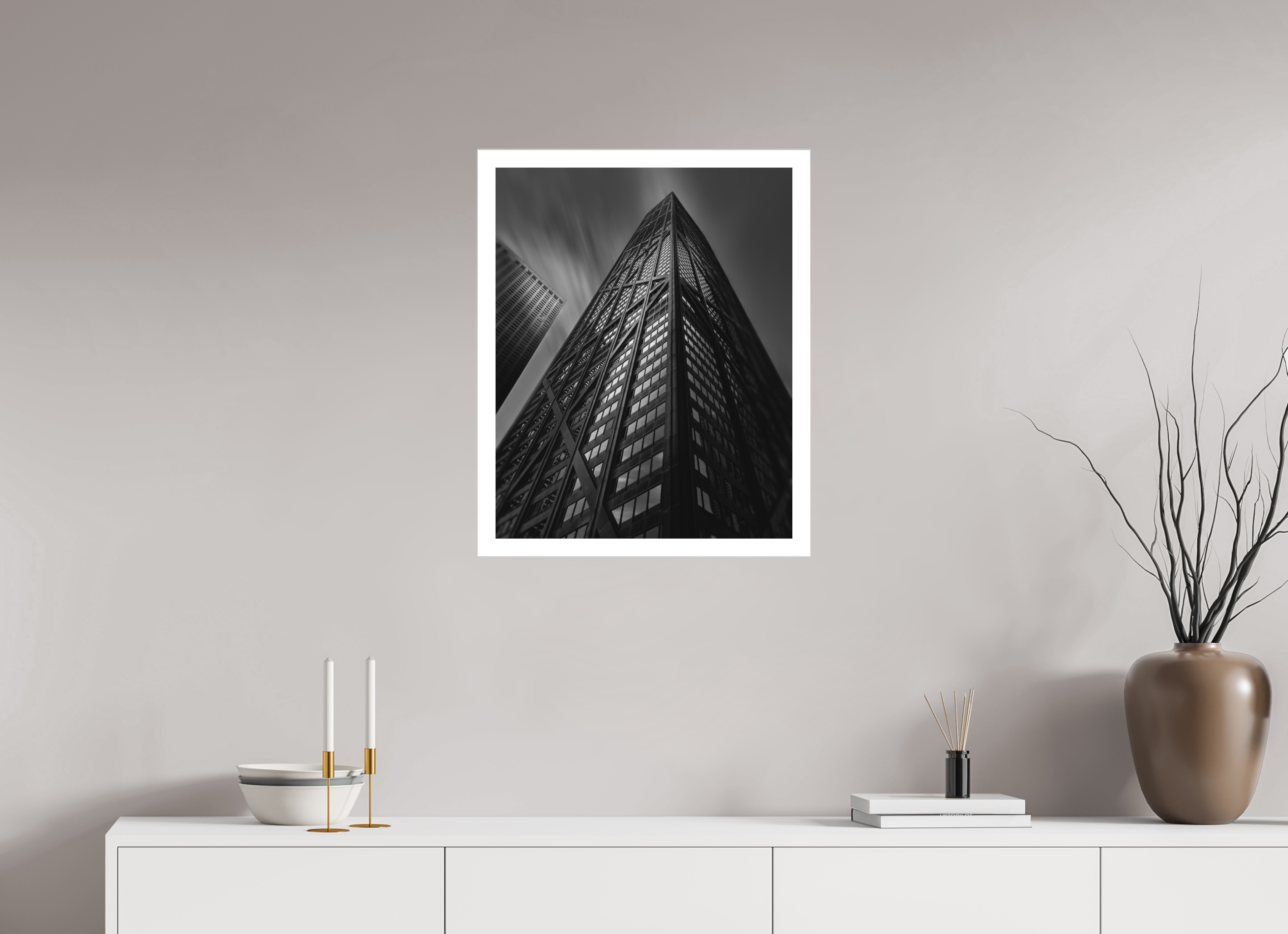


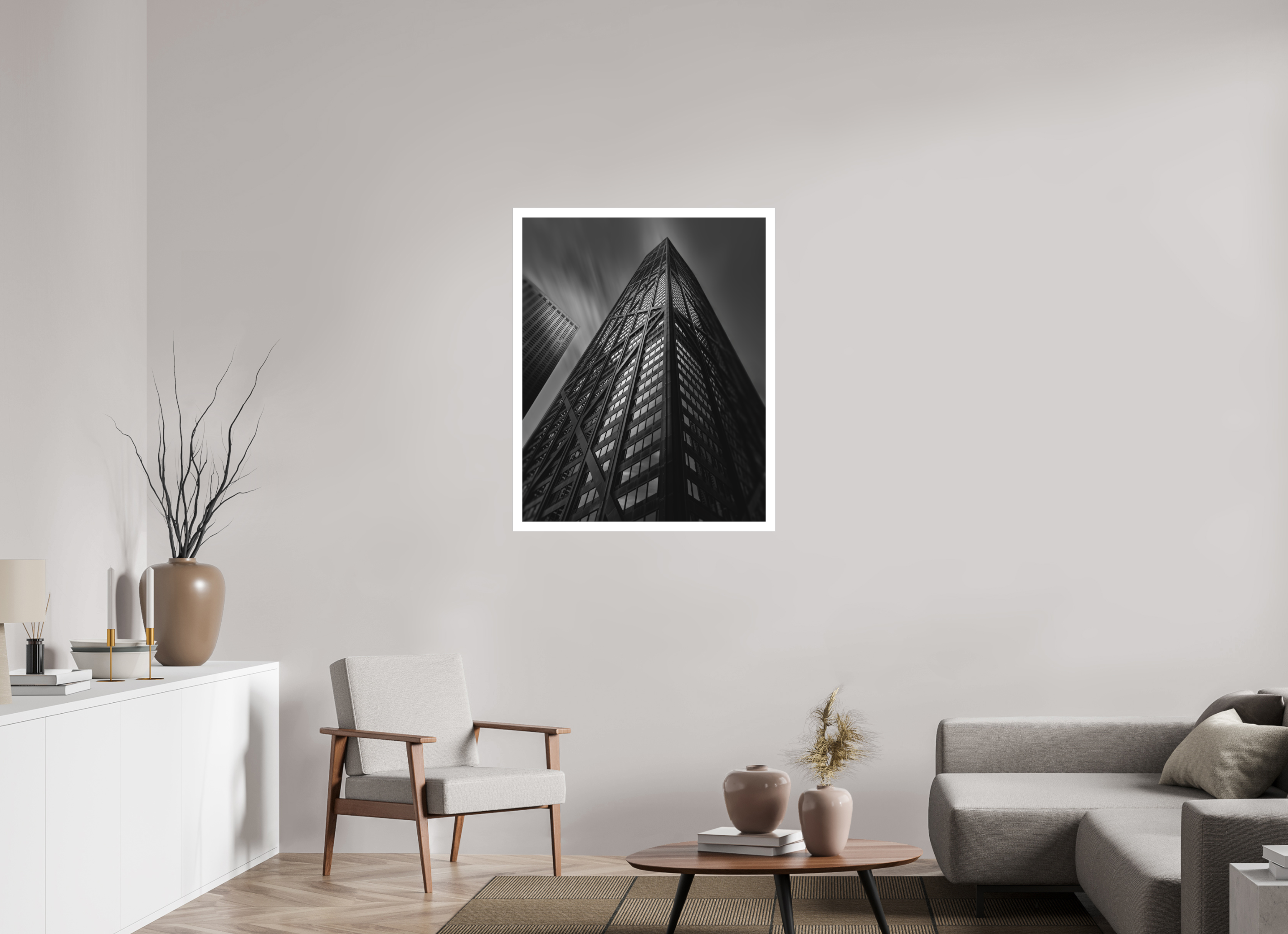
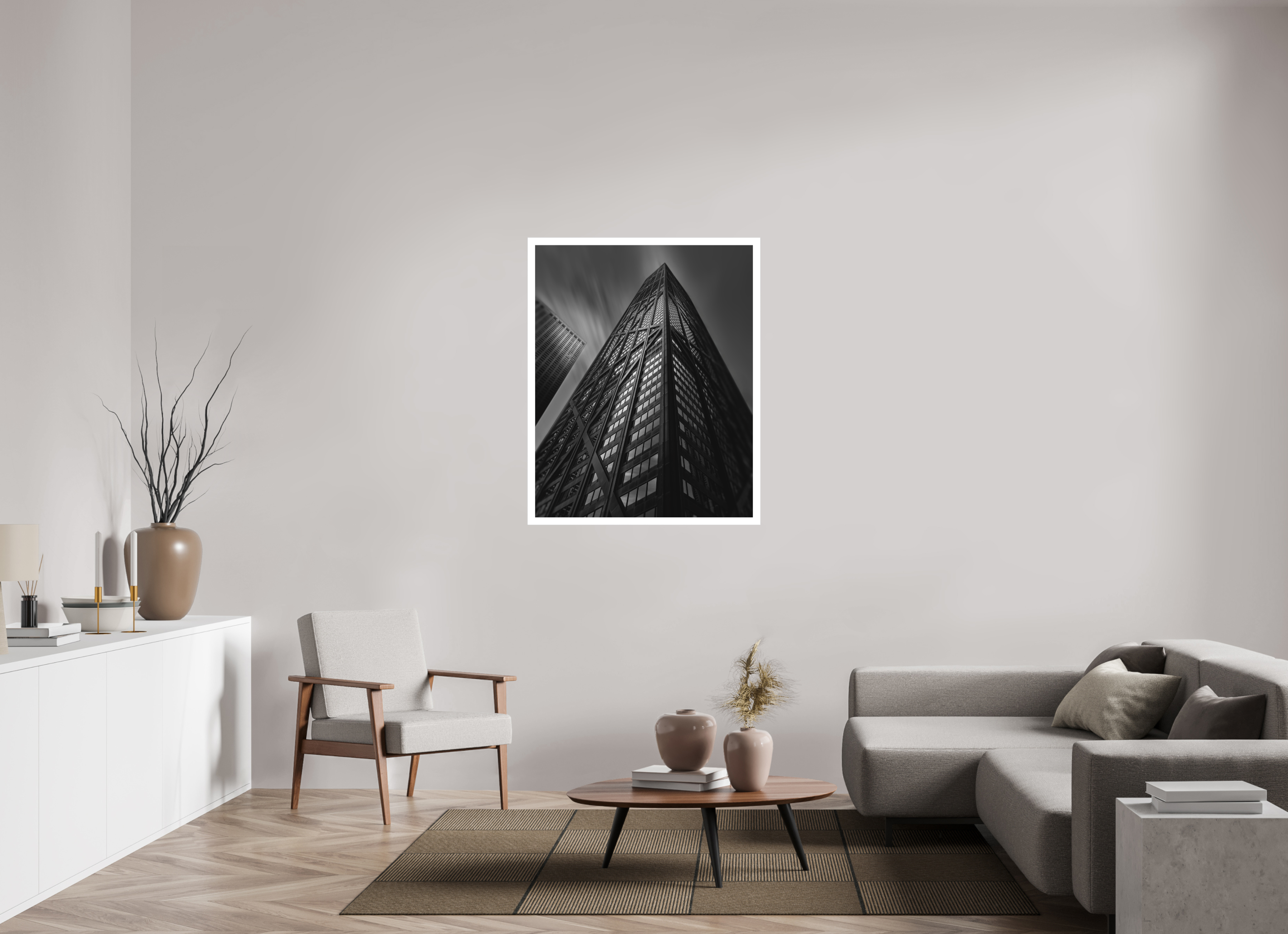
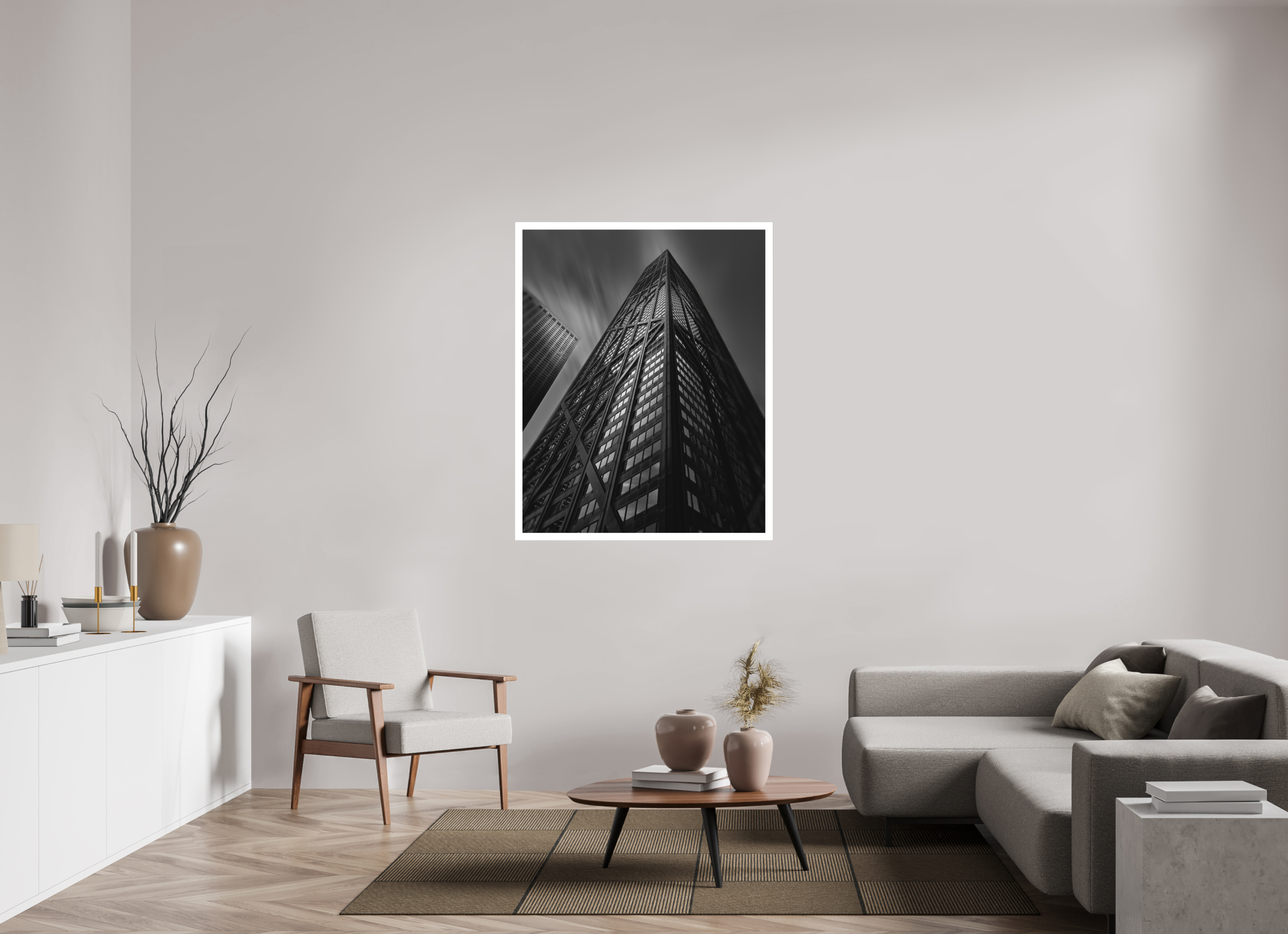


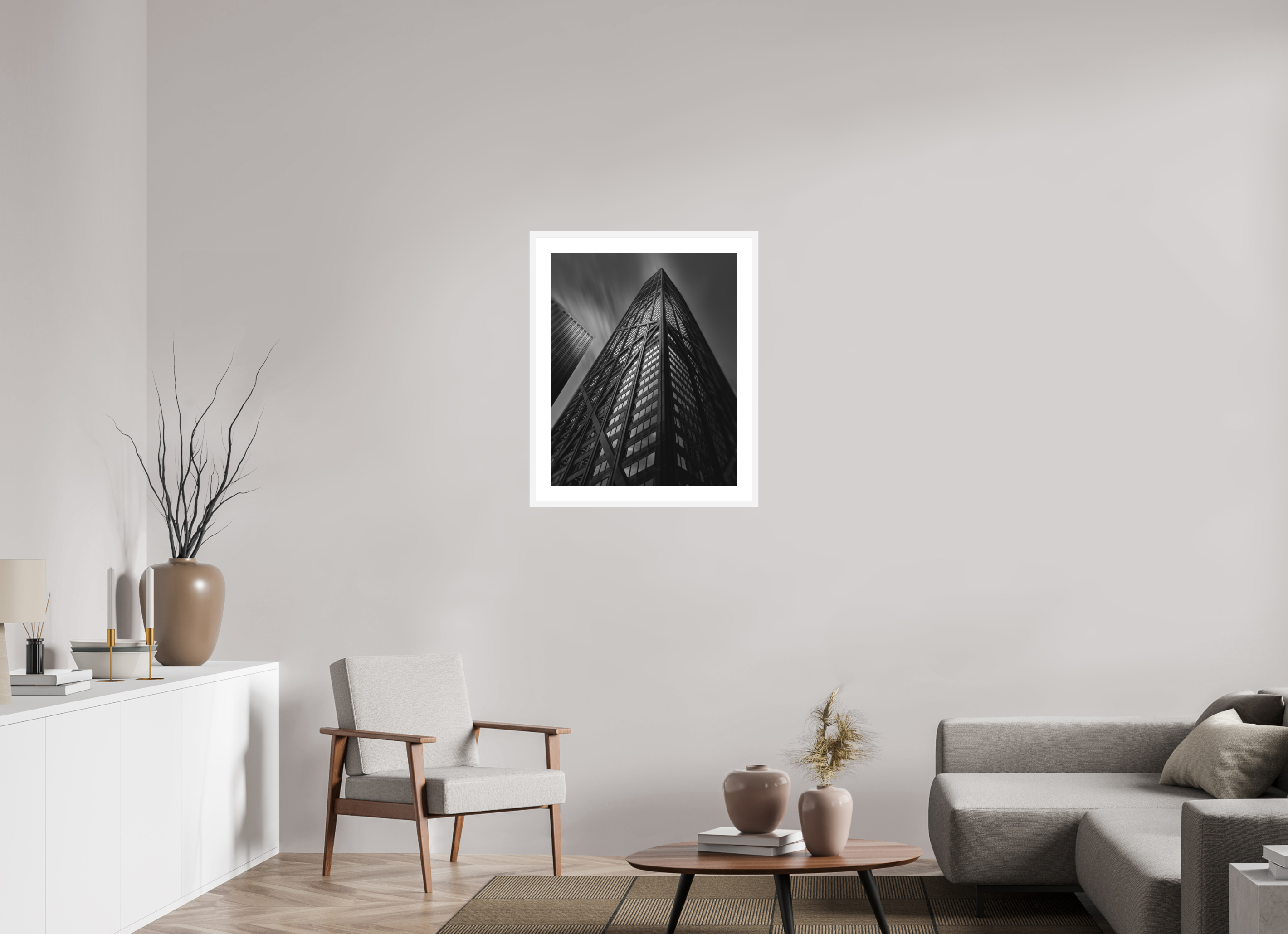

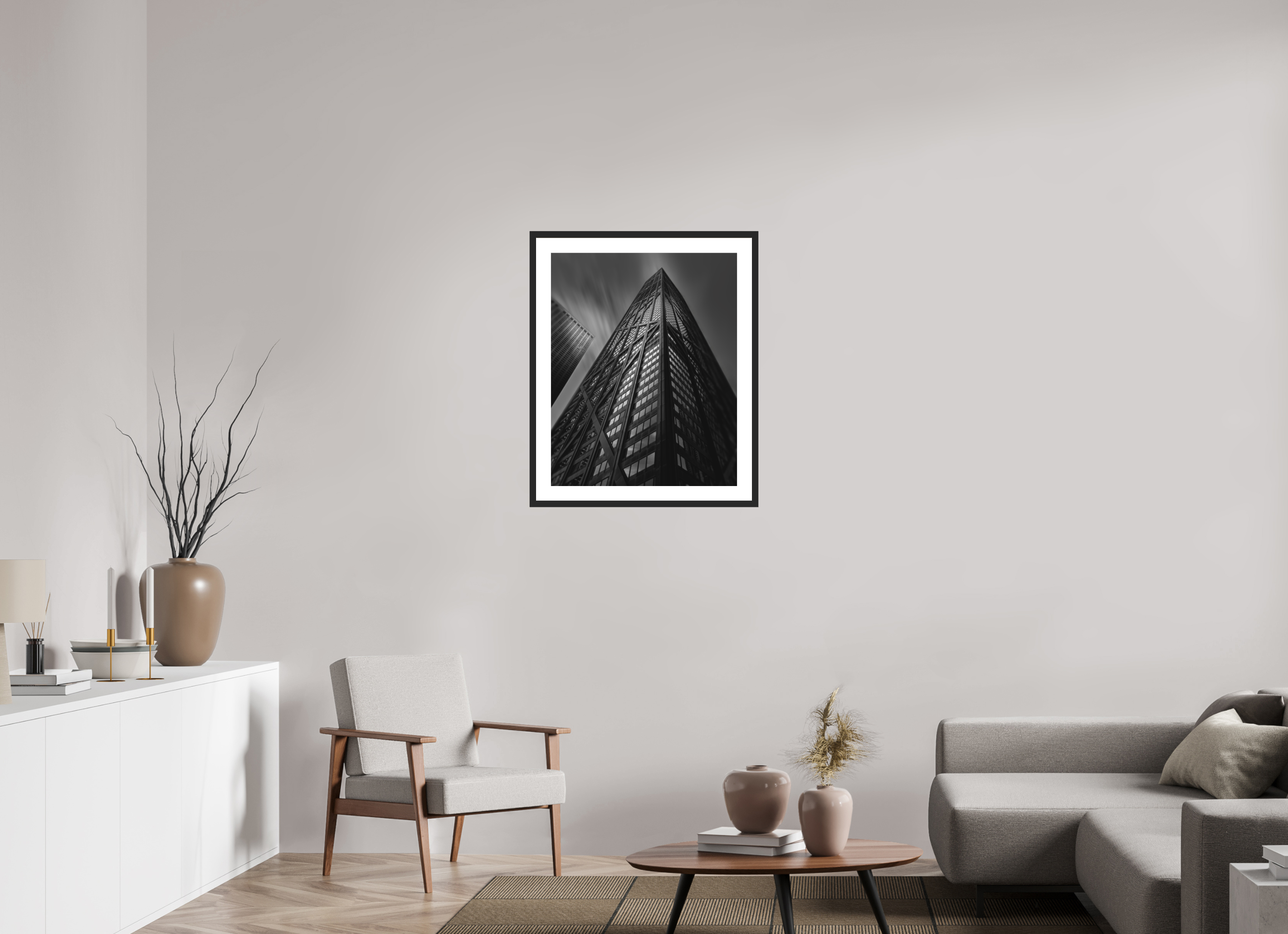
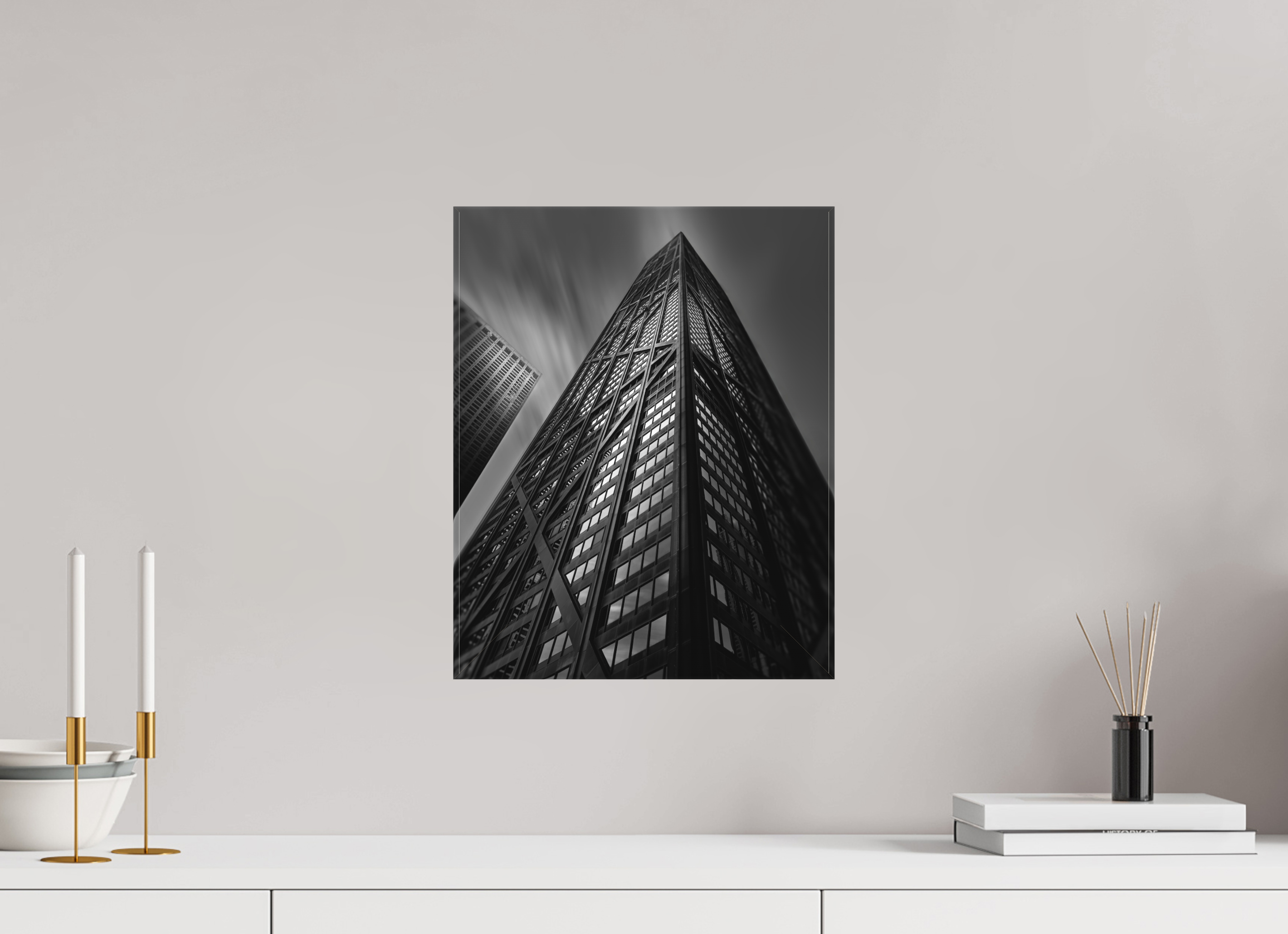
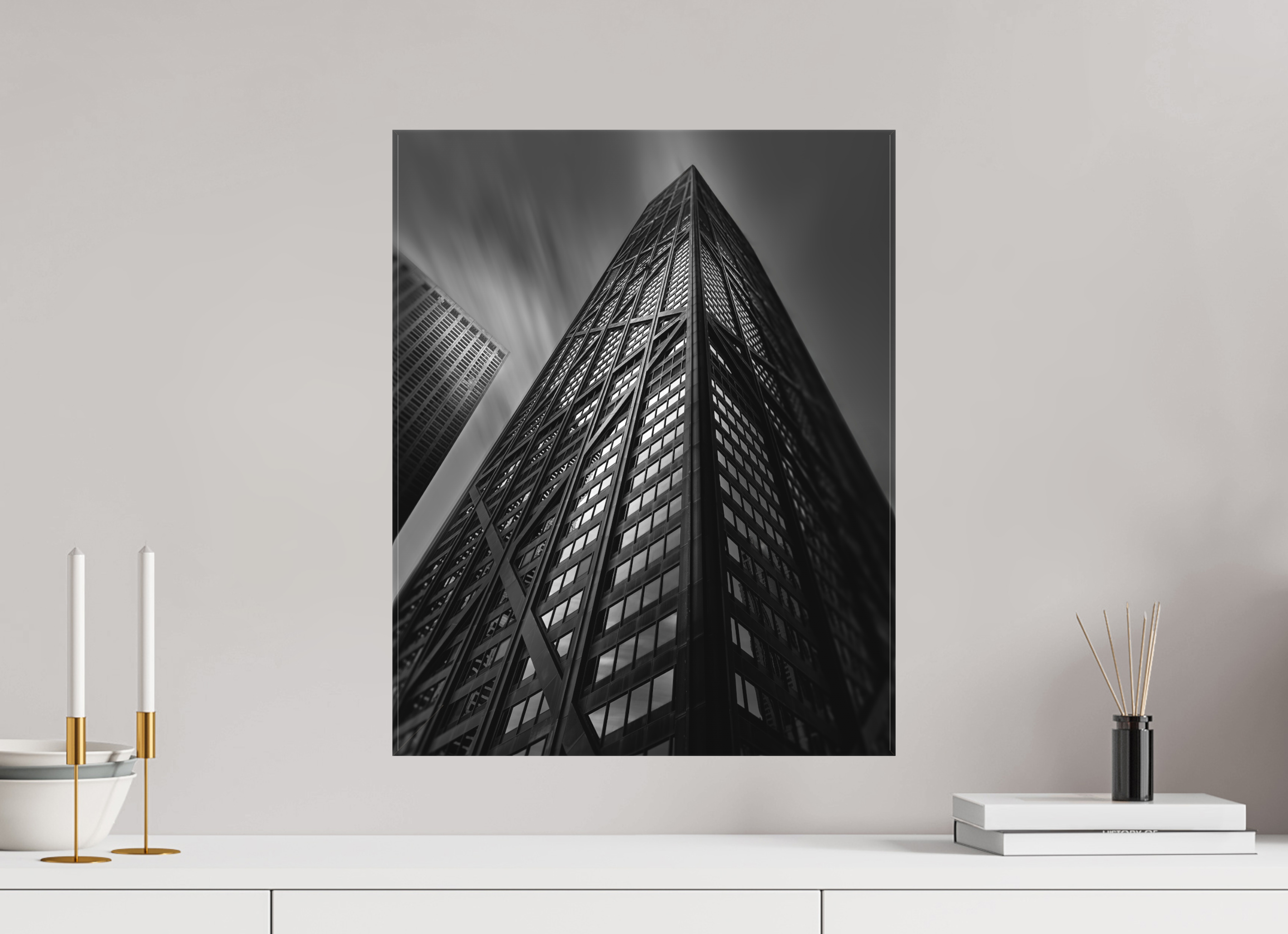

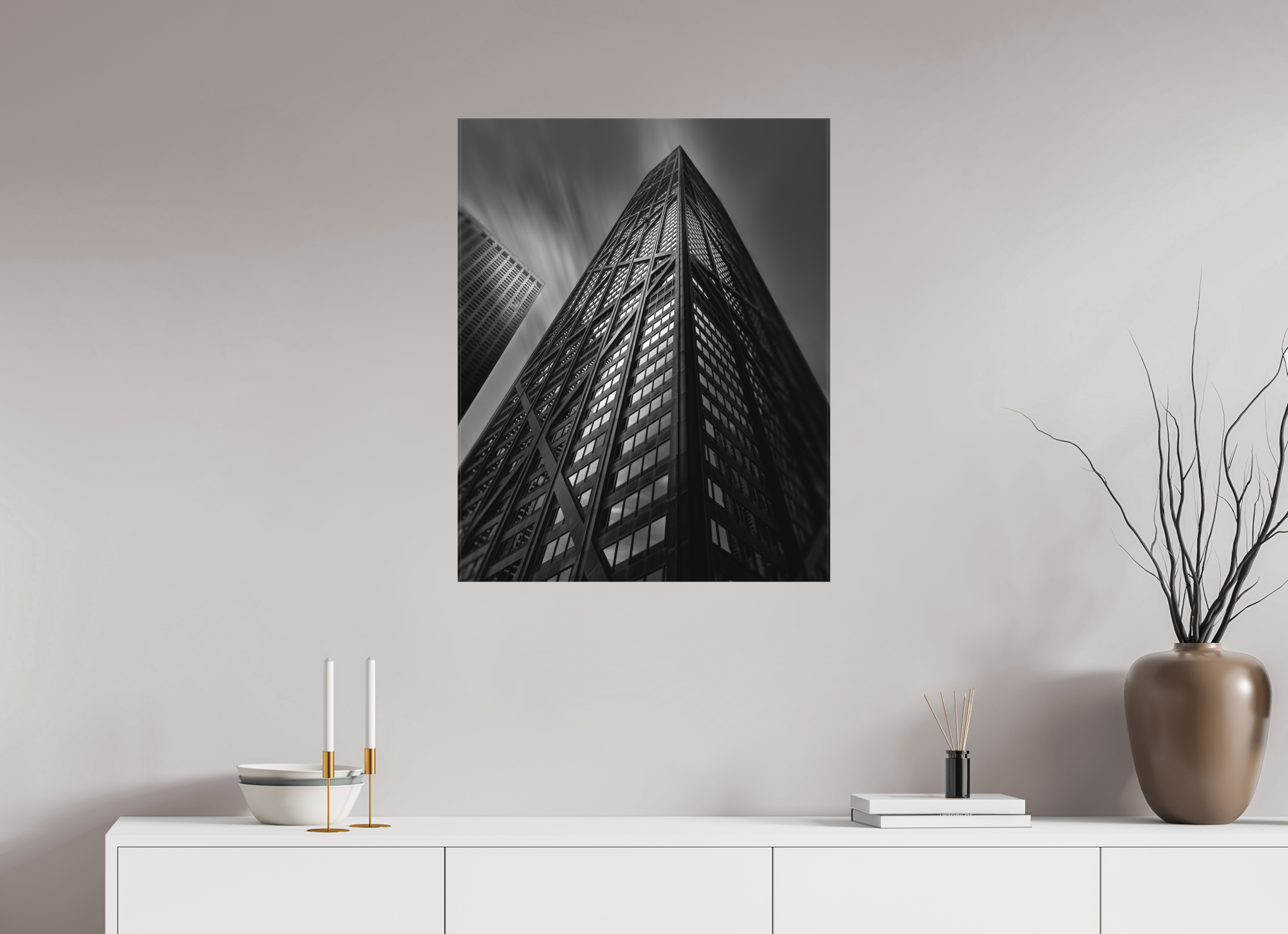
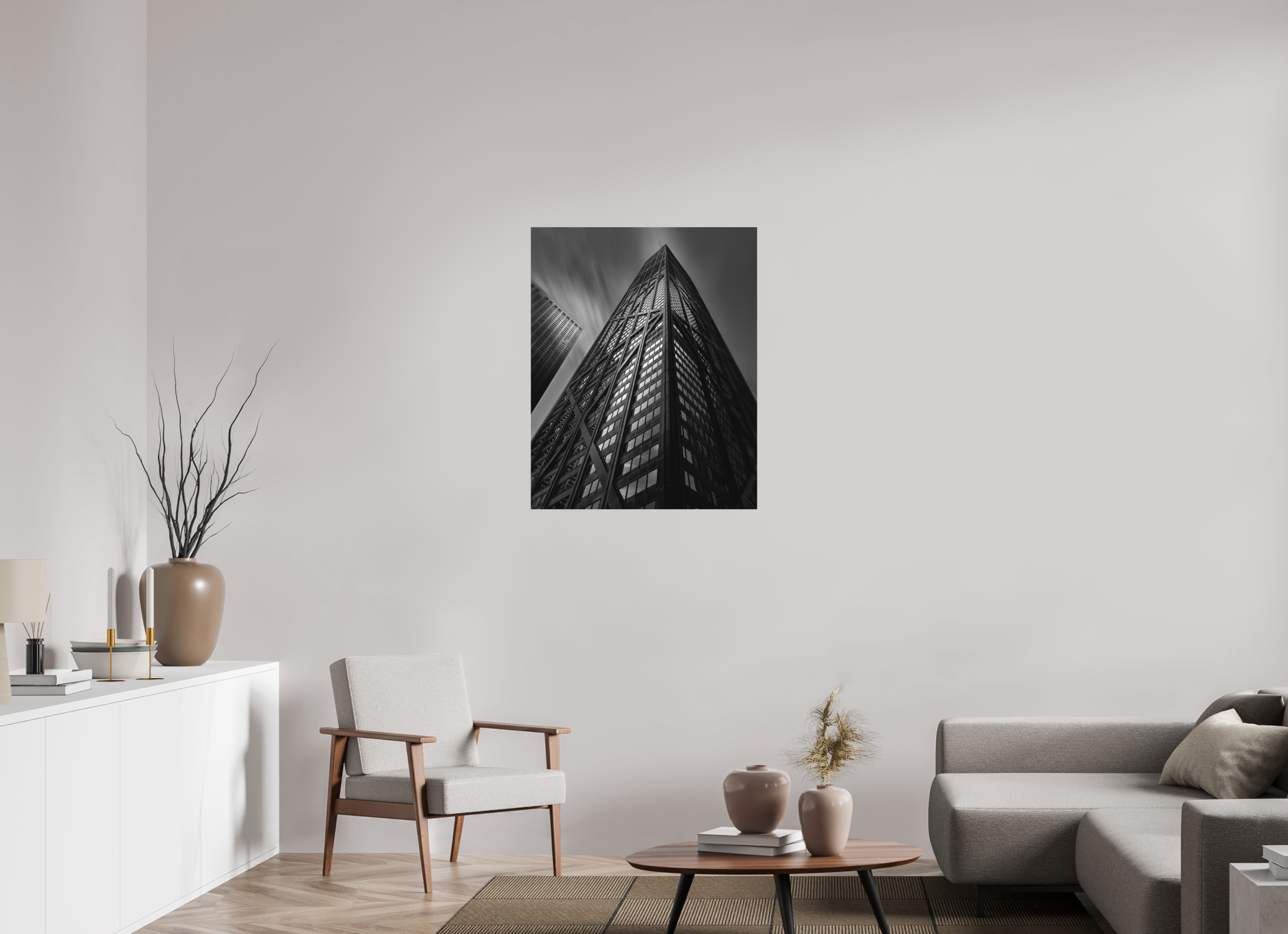
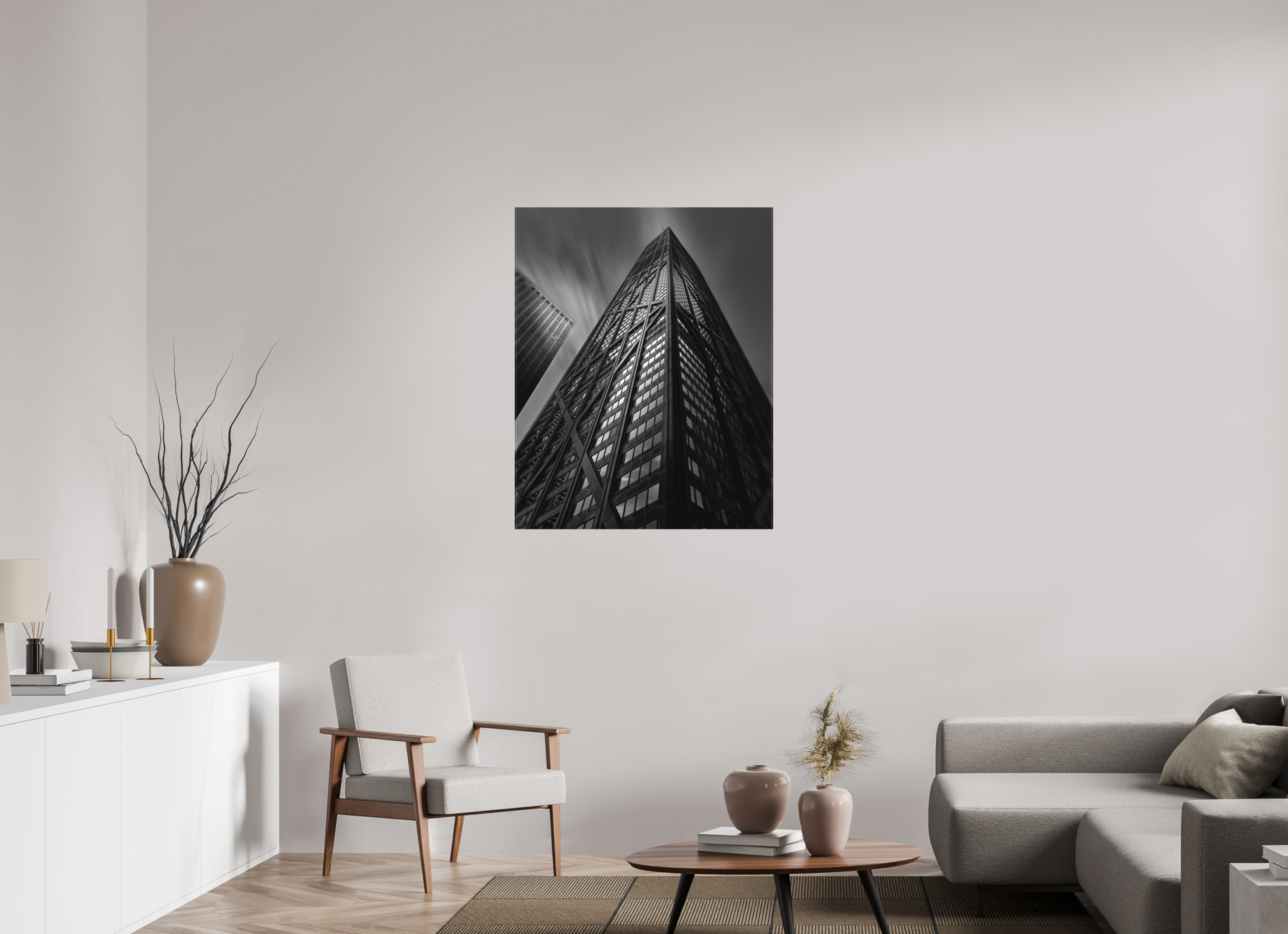
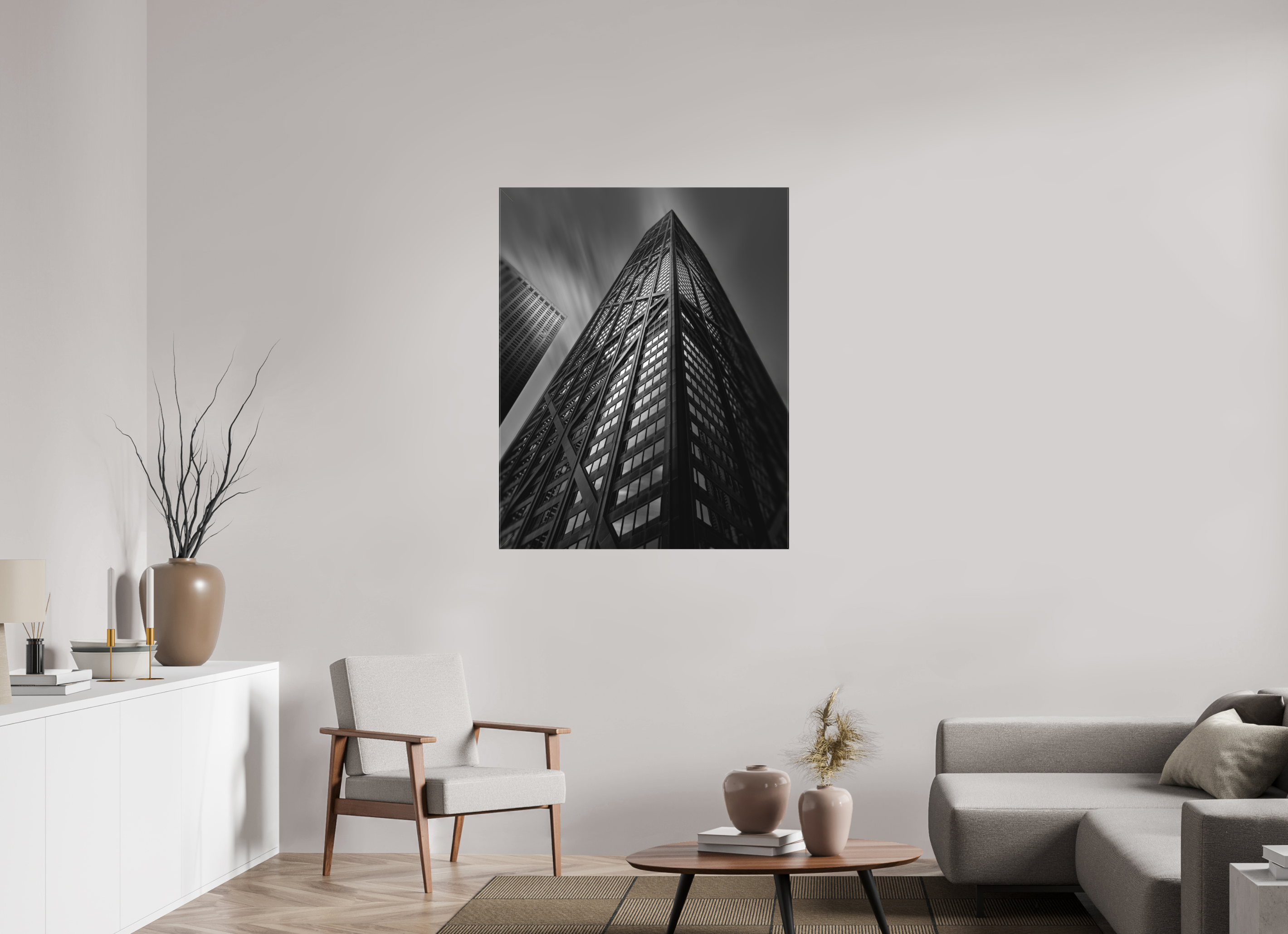
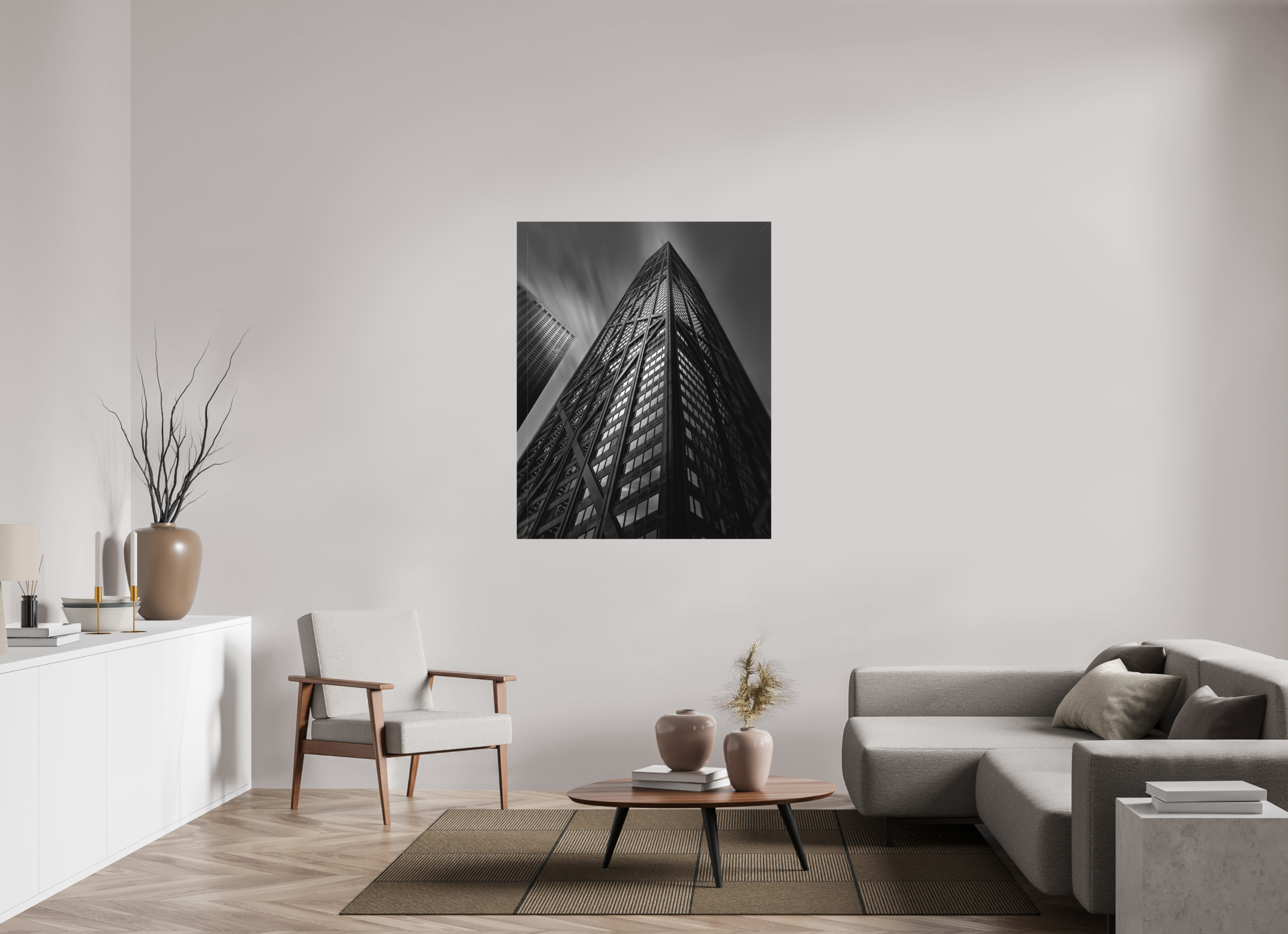
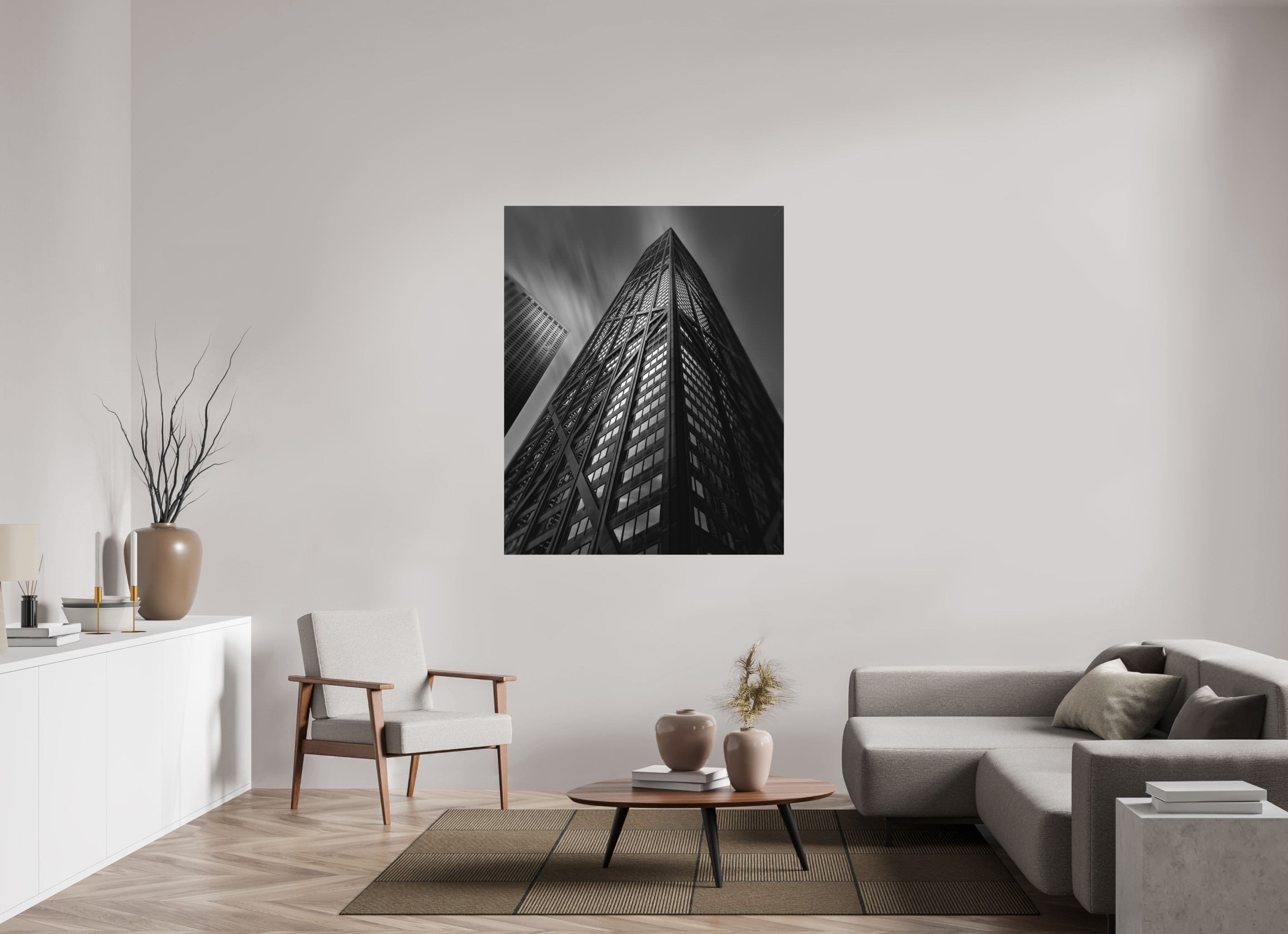
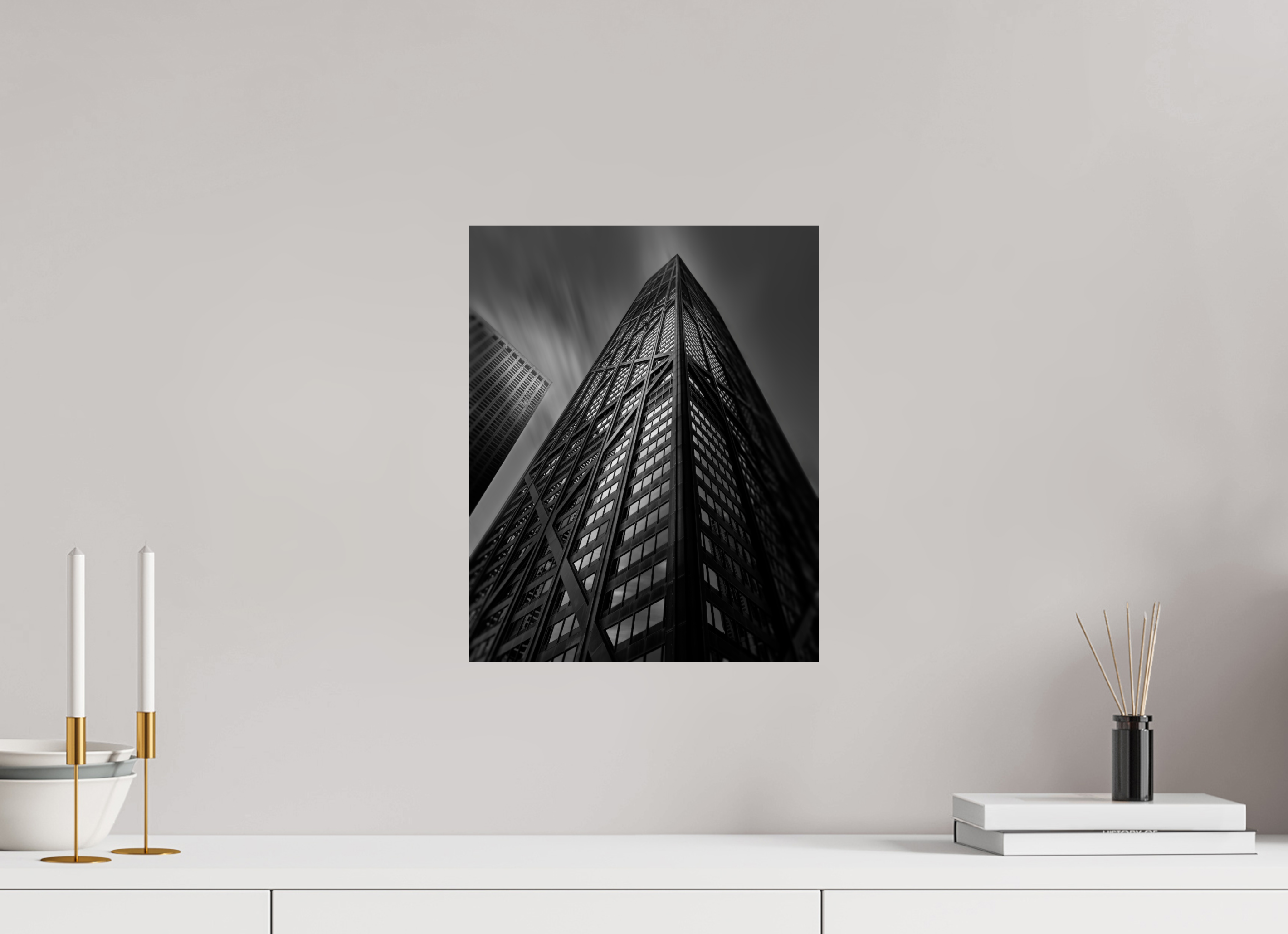


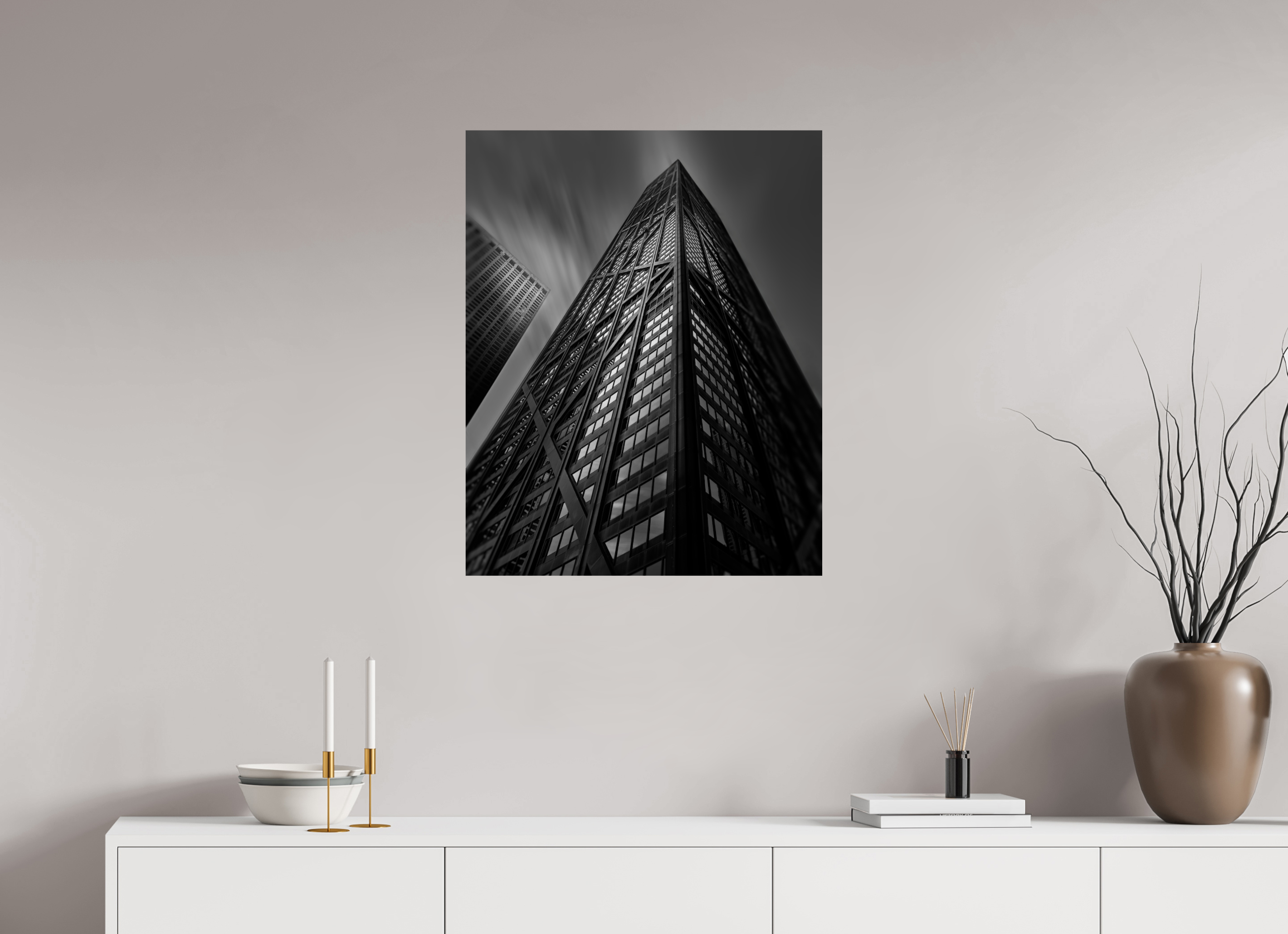
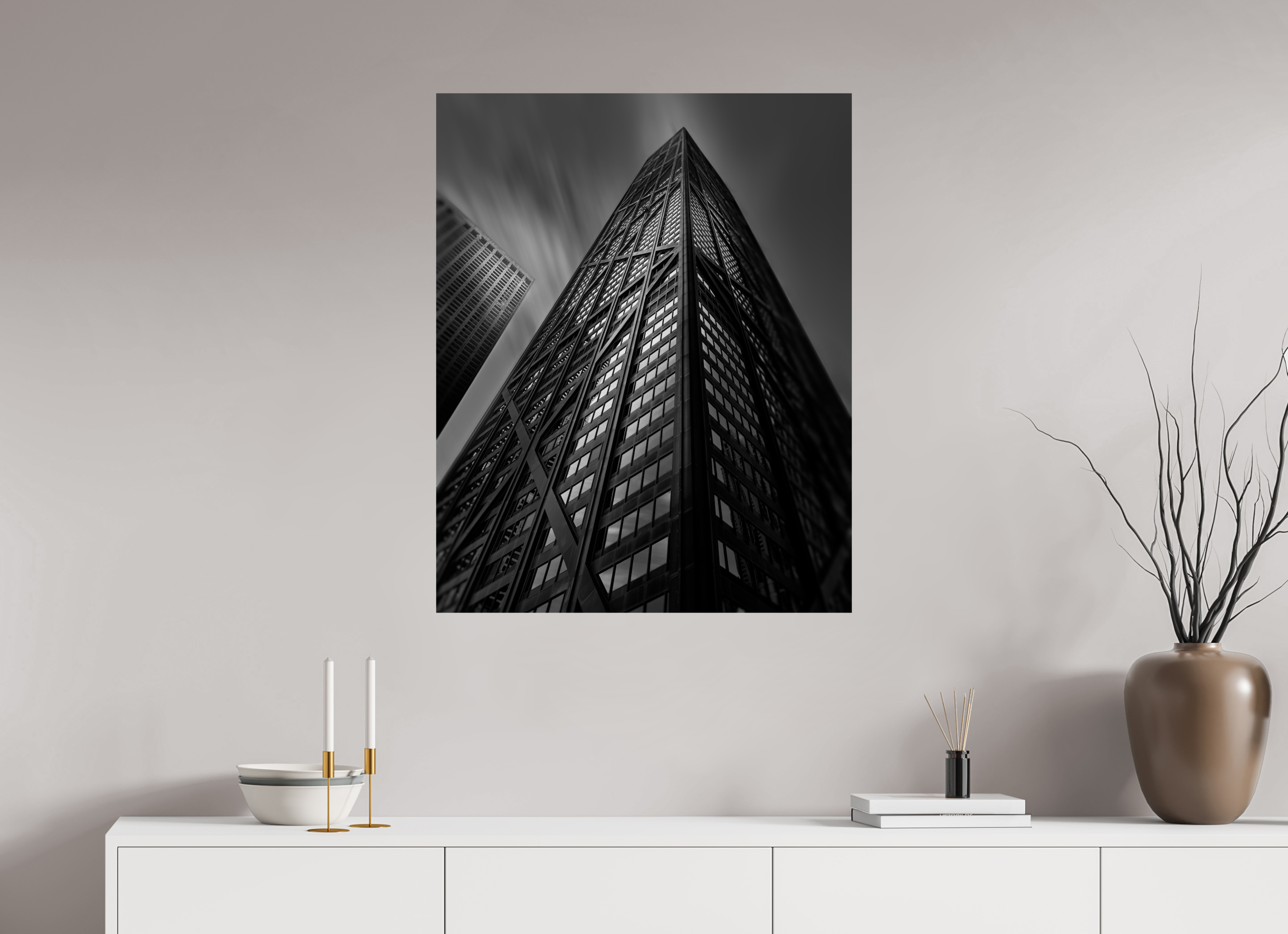

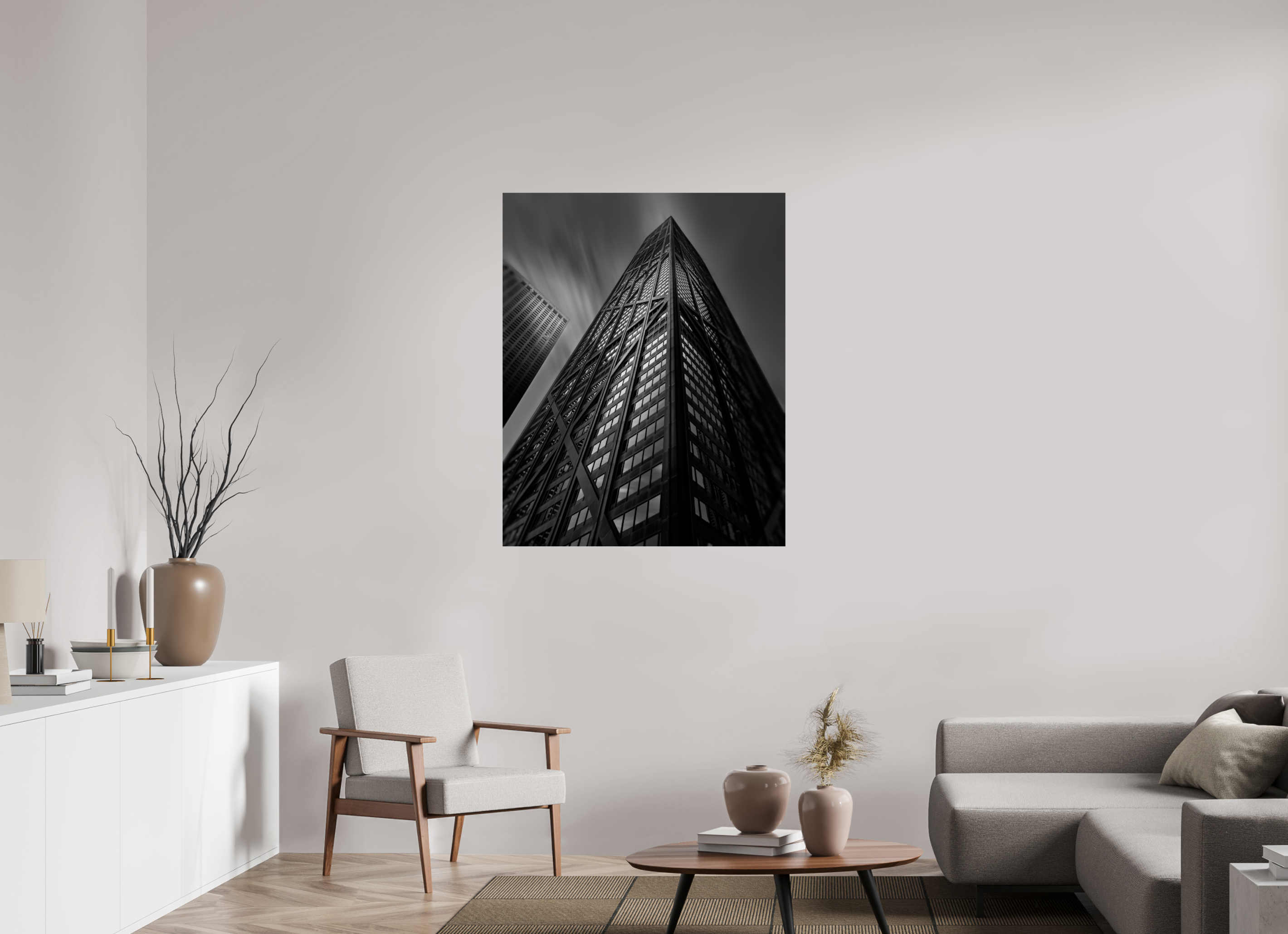
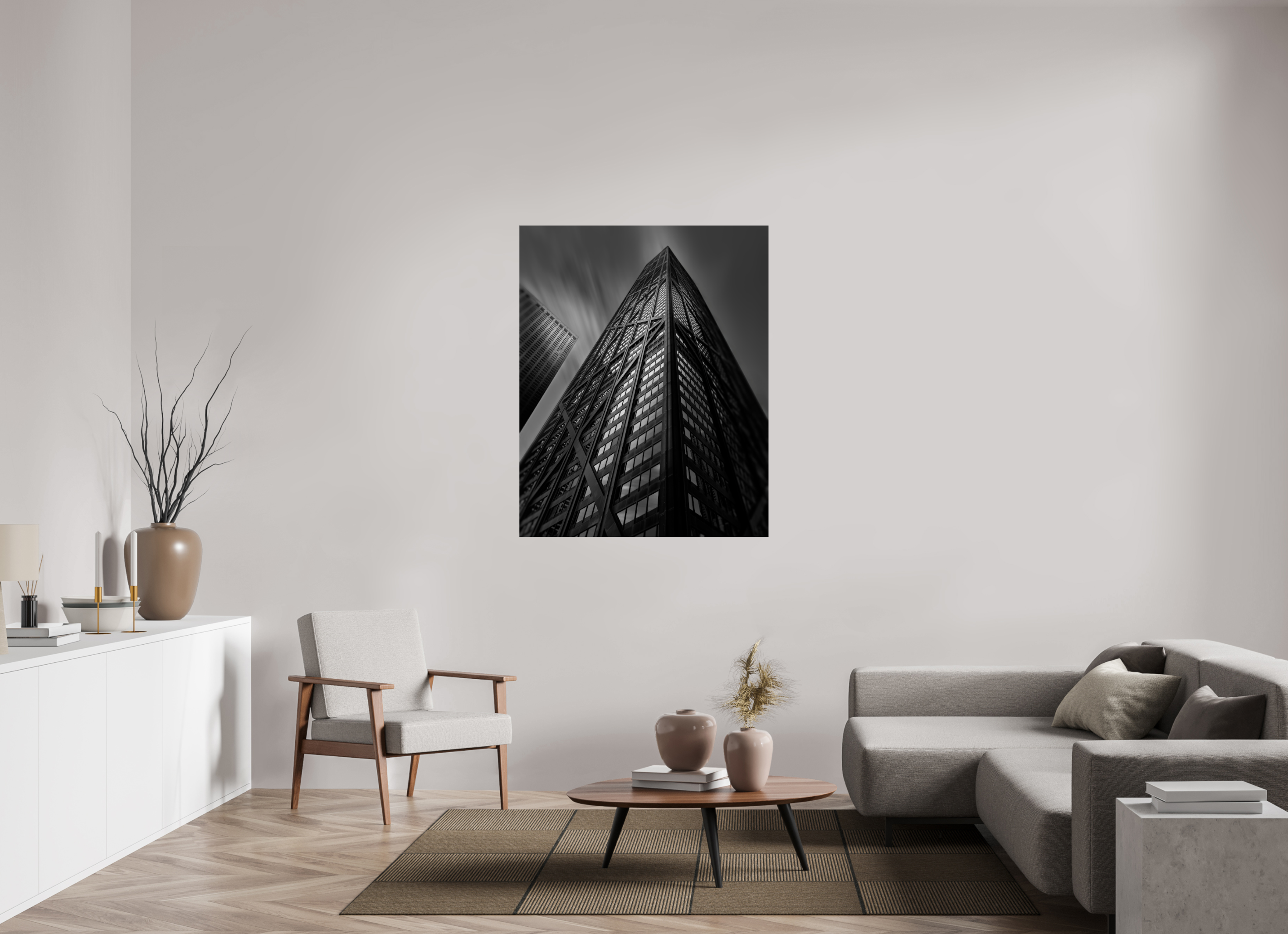
Chicago's John Hancock Building
Now known as 875 North Michigan Avenue—yuck—this will always be the Hancock Building to us. From the Wiki:
Structural Expressionism And The X-Braced Exterior
[It] is a 100-story, 1,128-foot-tall (344-meter)[7] supertall skyscraper located in Chicago, Illinois. Located in the Magnificent Mile district, the building was designed by Peruvian-American chief designer Bruce Graham and Bangladeshi-American structural engineer Fazlur Rahman Khan of Skidmore, Owings and Merrill (SOM).[8] When the building topped out on May 6, 1968,[1] it was the second-tallest building in the world after the Empire State Building, in New York City, and the tallest in Chicago. It is currently the fifth-tallest building in Chicago and the fourteenth-tallest in the United States, behind the Aon Center in Chicago and ahead of the Comcast Technology Center in Philadelphia. When measured to the top of its antenna masts, it stands at 1,500 feet (457 m).
One of the most famous buildings of the structural expressionist style, the skyscraper's distinctive X-braced exterior shows that the structure's skin is part of its "tubular system". This is one of the engineering techniques which the designers used to achieve a record height; the tubular system is the structure that keeps the building upright during wind and earthquake loads. This X-bracing allows for both higher performance from tall structures and the ability to open up the inside floorplan. Such original features have allowed 875 North Michigan Avenue to become an architectural icon. It was pioneered by Bangladeshi-American structural civil engineer Fazlur Khan and chief architect Bruce Graham.
It's simply magnificent. The name of this piece is Torquere, from the French word for truss, referring to its external bracing.
Chicago, Illinois 2023
Phase One XT•IQ4.150
Rodenstock 32mm
Request Custom Quote
Interested in this artwork in a different medium or size? Please contact us for a custom quote.
There are so many ways to print an image, so many papers and inks, and thousands of ways to frame or mount it. How does one choose? We've tried to simplify this process, by offering the types of prints, frames, and mountings that we use and love in our own home, and that we know complement our artwork.
Here is a short guide to the formats we offer:
Acrylic Block Gift Box
A small display piece — usually 4×6 or 8×8 inches. Whitewall's method is what makes this worth offering: the image is printed on archival paper first, then bonded to the acrylic. Many competitors print directly to acrylic, which compromises color reproduction and longevity. Our version keeps the brilliance and dimensional quality of a full acrylic presentation at a size and price that make it right for gifting or for a small dedicated space. Ships in a gift box. Available for images with native 1:1, 3:2, or 4:3 aspect ratios; for wider panoramas or unusual crops, see the other formats or request a custom quote. We have other printing houses for acrylic block in non-standard sizes.
Fine Art Bonded Acrylic
This is our premier print format. Pigment inkjet on Hahnemühle fine art paper, laminated behind glossy acrylic glass on an Alu-Dibond backing, in a brushed silver slimline case. The pigment inkjet process holds the widest color spectrum and the finest tonal gradation of any medium we offer, and the paper is archival for generations. To achieve the best longevity, the printed image is sealed behind acrylic glass with permanently elastic silicone. The sophisticated technology ensures perfect results for images of any size and also makes it possible to create impressive large formats up to 115 x 70 inches (290 x 180 cm) as seamless photo prints.This is our preferred gallery presentation, and we make it available in a variety of matted and unmatted with slimline frames of various tones, depending on the image itself. We love how the slimline case creates a sense of elegance, while staying out of the way of the print, which projects forward from the case. All Bonded Acrylic prints are mounted beneath museum matte acrylic to minimize reflections in almost all lighting conditions while accentuating the tones and depth opf the image.
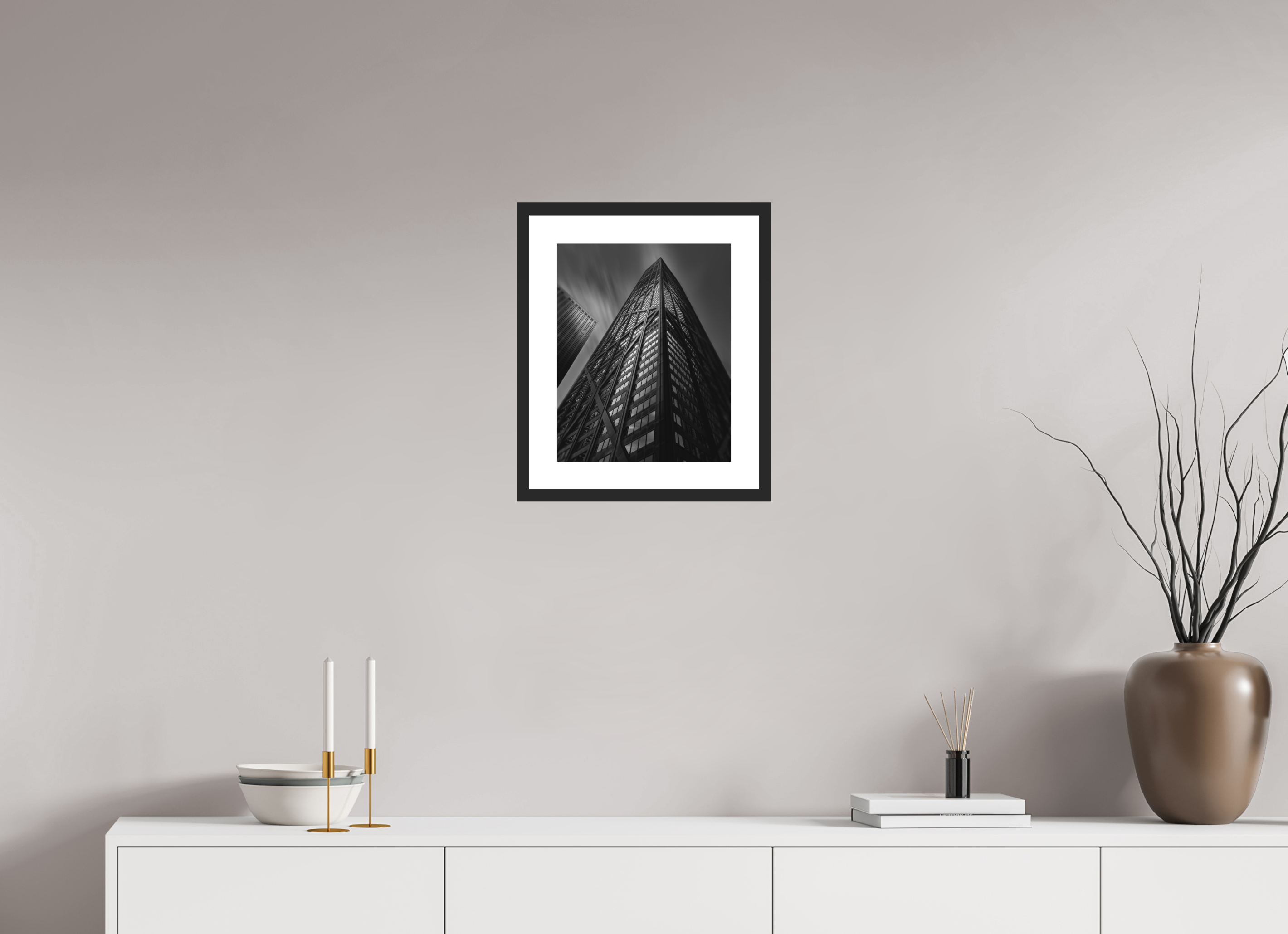
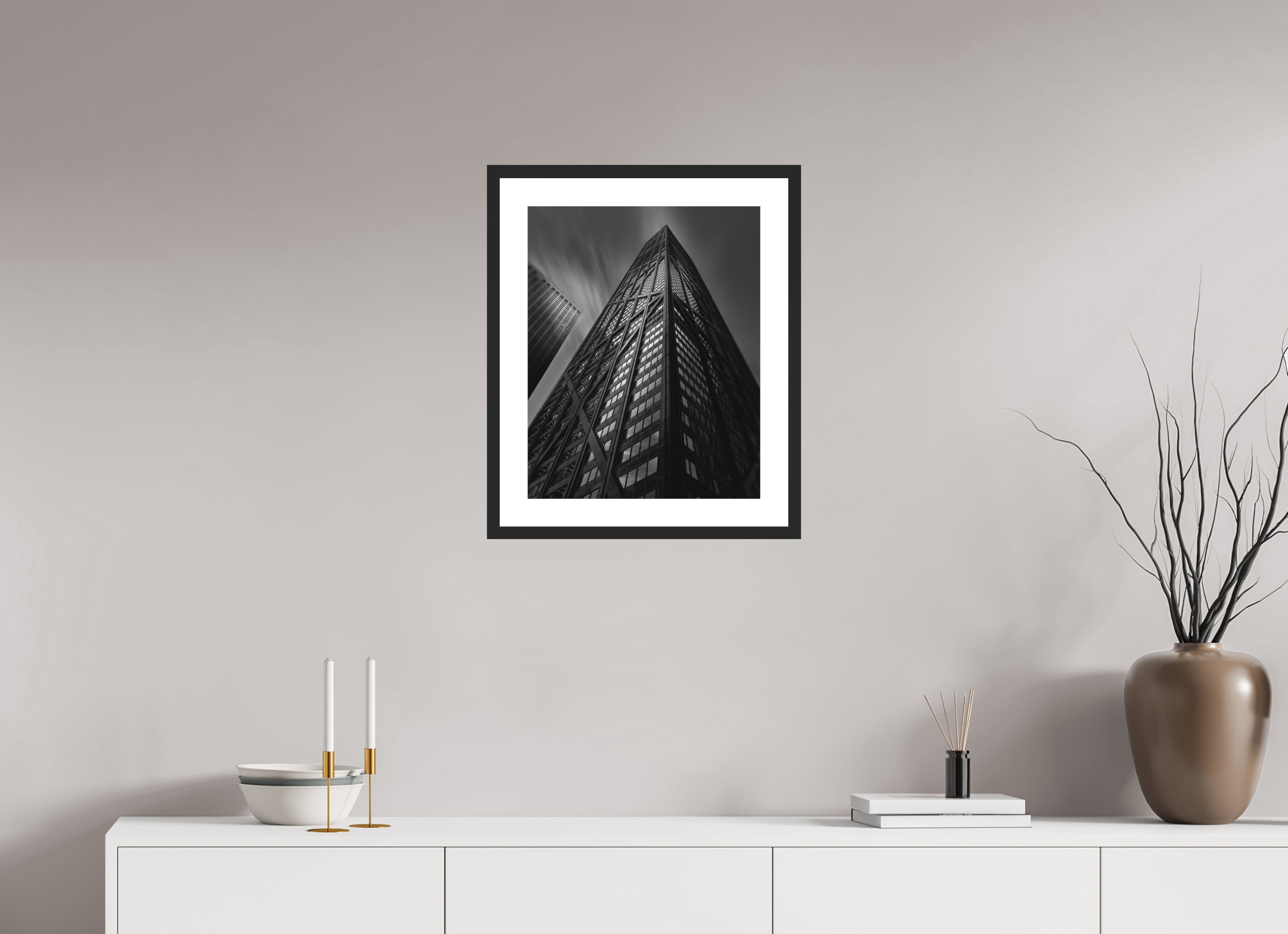
Passe-Partout, Black or White
Baryta paper — the silver-tone paper fine art black-and-white printing has used for eighty years — mounted in a double-mat passe-partout framing behind museum glass. Available with a black frame or a white frame; the paper and mat treatment are identical, only the frame color differs. Black frames read more contemporary and architectural; white frames read more traditional and gallery-quiet. Available for any image, though the treatment reads most naturally on monochrome work.
Textile Print
A pigment print on woven textile, wrapped on a wooden stretcher frame with mirror-edge treatment on the sides. Different from standard canvas: the surface is finer, the print holds detail better, the presentation is more sophisticated. Lightweight compared to acrylic or paper-under-acrylic, easier to hang, and the price point stays accessible while still feeling serious. Best for larger sizes and rooms where reduced weight and reflection matter.
Giclée on Alu-Dibond
For those who want to select their own framing and/or glass cover. A giclée fine art print on Hahnemühle FineArt Pearl paper, mounted on Alu-Dibond backing, no glass, no frame. The paper texture is visible; there are no reflections; the print itself is what the viewer sees. This is what a curated gallery show hangs. Best for viewers who want the print to speak without any surface between it and them. It's also for someone who wants to have their print custom framed with specific glass.
Not seeing what you want?
We understand that every living space is unique, and every person has their own tastes. So, if what we offer as our standard array is not exactly what you want, we recommend you reach out to us and let us know what interests you. We can guide you through the vast WhiteWall selection process and prepare a custom quote for you. If you have a specific medium, size, or presentation in mind that isn't listed here, please request a custom quote — we can work directly with Whitewall's full catalog to build a piece to your specifications.
Optionen auswählen